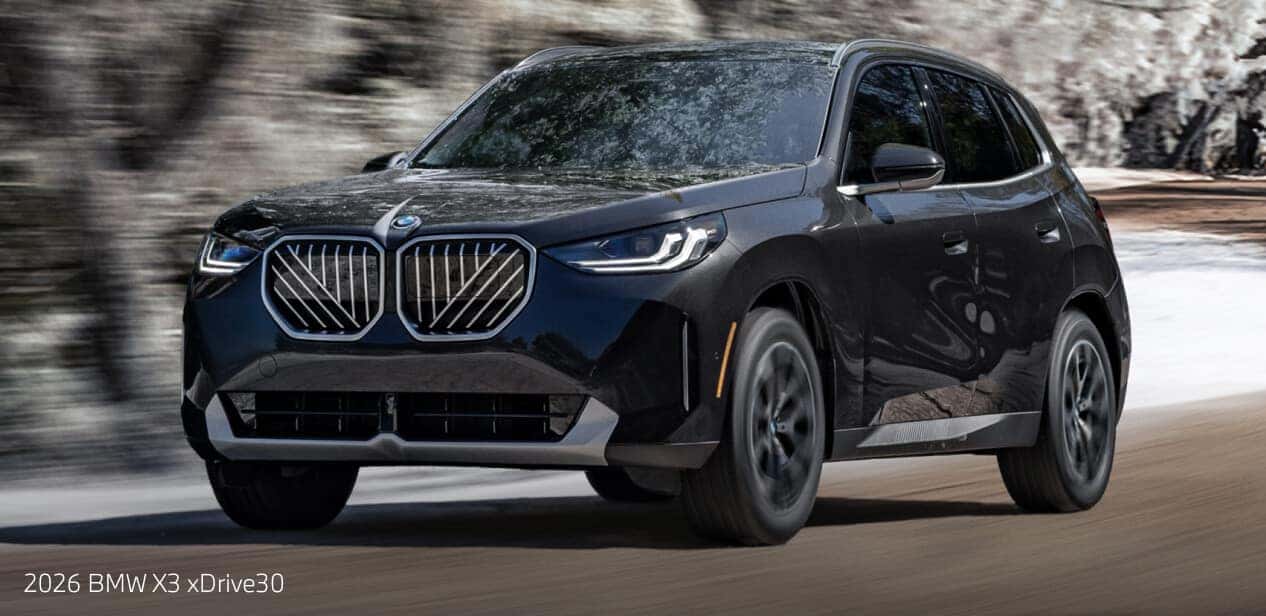
The BMW X3 MPG of 27/33/29 MPG (City/Highway/Combined)1 is outstanding for an SUV of its size. With a BMW X3 gas tank size of 17.2 gallons, you can theoretically explore nearly 500 miles per refill.2 But did you know that, technically, it's not the most fuel-efficient model of its lineup? Let's see where this compact SUV will take you before visiting our Athens BMW dealership.
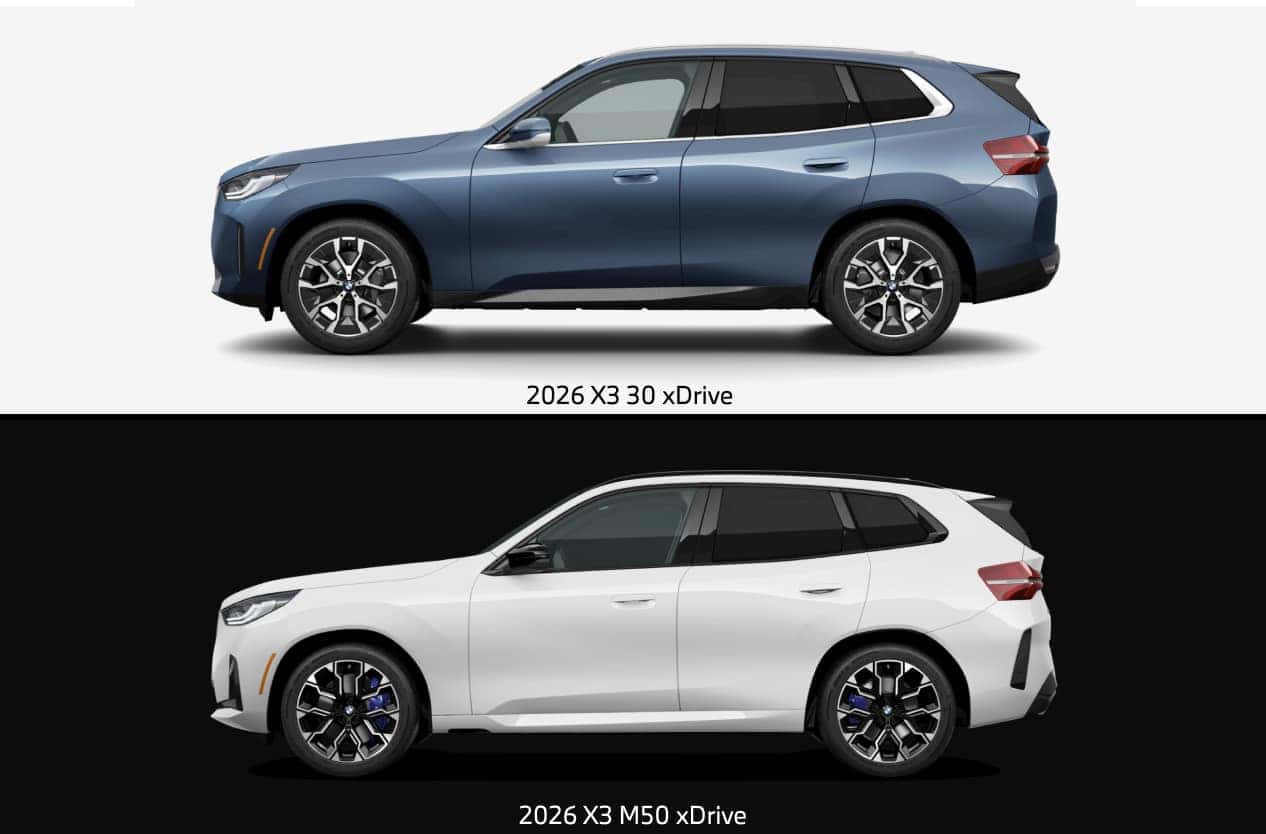
The new BMW X3 for sale has two distinct trim levels: the standard BMW X3 30 xDrive and the available BMW X3 M50 xDrive. Here's how the 2026 BMW X3 MPG pans out:
| Model | BMW X3 30 xDrive | BMW X3 M50 |
| Engine | 2.0L turbo 4-cyl | 3.0L turbo 6-cyl |
| Drivetrain | AWD | AWD |
| EPA-Est. MPG (City / Hwy / Cmb)1 | 27 / 33 / 29 | 25 / 30 / 27 |
Engines are tied to trim level, so your 2026 BMW X3 30 xDrive will have similar estimations to any others on our lot, thanks to the following two mild hybrid engines:
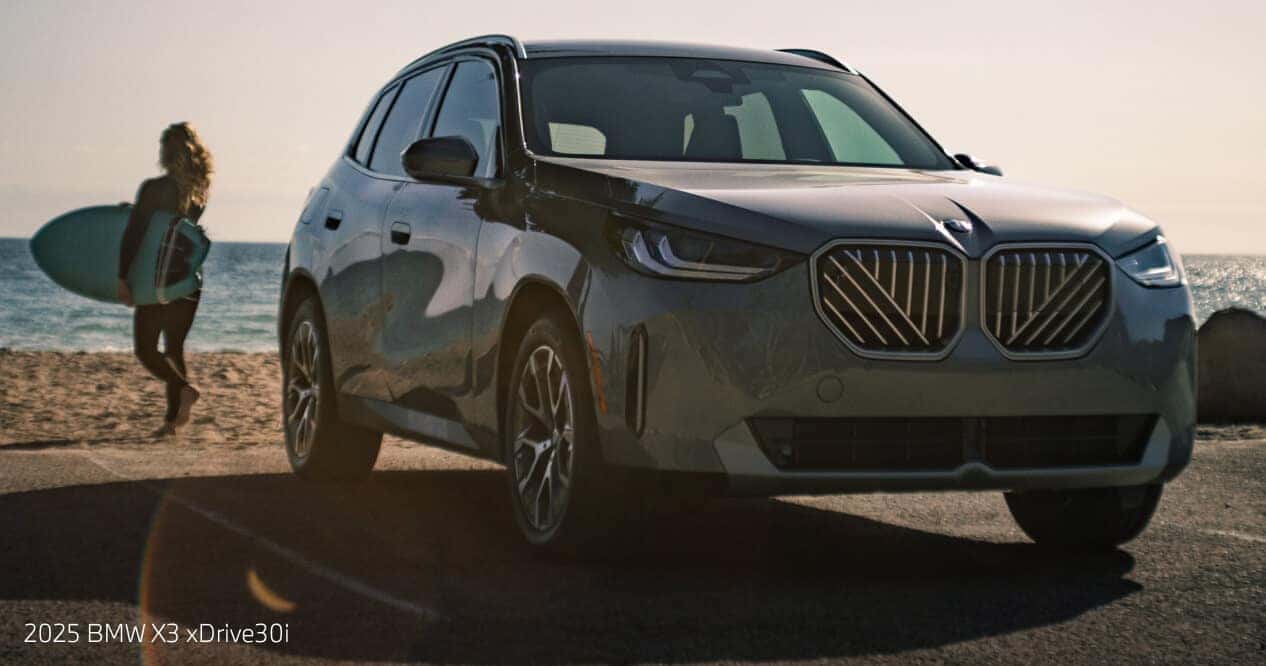
One of the factors we don't touch on in our BMW X3 vs. BMW X5 comparison piece is that the BMW X3 was introduced as a 2004 model year – a couple of years later than the 1999 BMW X5. Here's how its engines and fuel economy looked back then:

| Year | Trims | Engines | EPA-Est. MPG (City / Hwy / Cmb)1 |
| 2026 |
|
|
|
| 2025 |
|
|
|
| 2024 |
|
|
|
| 2023 |
|
|
|
| 2022 |
|
|
|
| 2021 |
|
|
|
| 2020 |
|
|
|
| 2019 |
|
|
|
| 2018 |
|
|
|
| 2017 |
|
|
|
| 2016 |
|
|
|
| 2015 |
|
|
|
| 2014 |
|
|
|
| 2013 |
|
|
|
| 2012 |
|
|
|
| 2011 |
|
|
|
| 2010 | xDrive30i | 3.0L I-6 |
|
| 2009 | xDrive30i | 3.0L I-6 |
|
| 2008 | 3.0si | 3.0L I-6 |
|
| 2007 |
|
3.0L I-6 |
|
| 2006 | 3.0i | 3.0L I-6 |
|
| 2005 |
|
|
|
| 2004 |
|
|
|
While the xDrive28d does have the highest fuel economy of the current model lineup, with 30 MPG (Combined),1 that is only with the help of diesel gasoline, which tends to be more expensive per gallon. The 2026 BMW X3 MPG is currently the most efficient vehicle, and a 2020 or 2021 BMW X3 xDrive30e is best for individuals ready to charge.
Some of our most popular BMW X3 lease specials are for the hybrid models. While the BMW X3 introduced a handful of plug-in and mild hybrids starting in 2020, efforts to electrify the lineup ramped up in 2025, creating the BMW X3 hybrid MPG that shocks customers to this day:
| Year | Mild Hybrid Powertrains | Mild Hybrid MPG (City / Hwy / Cmb)1 | Plug-In Hybrid Powertrains | PHEV MPG (Cmb)1 | PHEV MPGe (Cmb)3 |
| 2026 |
|
|
N/A | N/A | N/A |
| 2025 |
|
|
N/A | N/A | N/A |
| 2024 | M40i (3.0L turbo I-6) | 21 / 26 / 23 | N/A | N/A | N/A |
| 2023 | M40i (3.0L turbo I-6) | 21 / 26 / 23 | N/A | N/A | N/A |
| 2022 | M40i (3.0L turbo I-6) | 21 / 26 / 23 | N/A | N/A | N/A |
| 2021 | N/A | N/A | xDrive30e (2.0L turbo 4-cyl) | 24 | 60 |
| 2020 | N/A | N/A | xDrive30e (2.0L turbo 4-cyl) | 24 | 60 |
Are you ready to see how the new SUV handles city streets and highway pavement? Our BMW X3 interior overview puts you behind the wheel of the SUV in a detailed digital tour. Then, once you're sure it's the choice for you, you can schedule a test drive with our experienced staff.
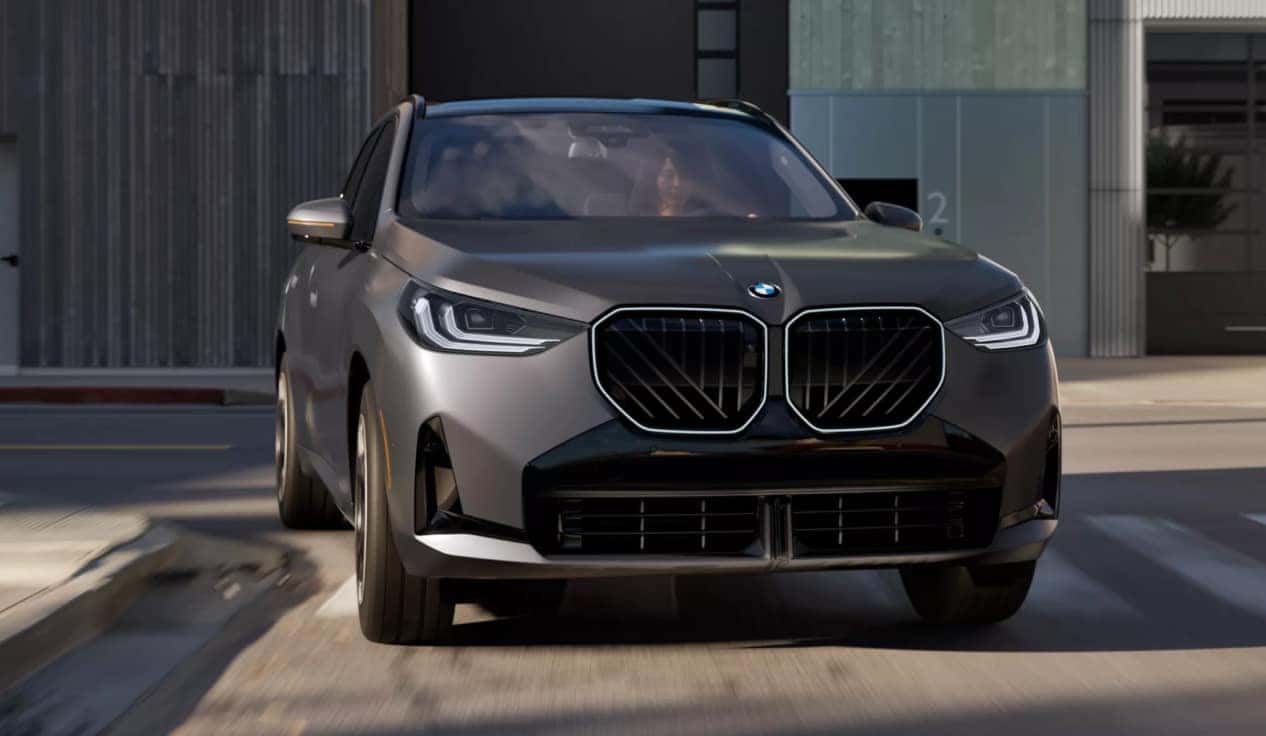
Nearly every model year of the BMW X3 utilizes premium fuel (or diesel) to reach maximum fuel efficiency and performance metrics. The preferred BMW X3 gas type is premium to reduce strain on the high-fidelity engine and reduce wear and tear. Specific to the xDrive28d trim, you will instead use diesel fuel to maximize your potency, reaching the highest gas MPG rating of any model year.
While the BMW X3 does not require premium gas, it isn't recommended to use regular fuel too often. The BMW gas mileage only reaches its high metrics with premium fuel, and regular fuel can eventually reduce the performance of your engine because it lacks the density required for optimal engine function. To maximize fuel efficiency, we recommend using premium fuel.
To open your gas cap and fuel door, do the following:
While you can put 89 gas in your BMW X3, we don't recommend doing so outside of emergencies. The BMW X3 reaches max fuel economy with 91 Octane, or premium, fuel. Using 89 octane can potentially cause additional wear and tear on the engine, resulting in lower BMW X3 MPG, horsepower, and torque. To prevent this, use 91 or higher when refueling.
1Preliminary EPA-estimated figures are for comparison purposes only. Your actual mileage will vary, depending on speed, driving habits, trip length and driving conditions; actual mileage may be lower.
2Estimated ranges provided are subject to variation based on factors such as fuel levels, driving habits, road conditions, and individual vehicle performance. These estimates should be used for comparison purposes only and shall not be solely relied upon.
3Preliminary EPA-estimated figures are for comparison purposes only. Your actual mileage will vary, depending on speed, driving habits, trip length and driving conditions; actual mileage may be lower. Note for MPGe: All data are provisional and subject to official confirmation. The provisional power consumption figures have been calculated based on the ECE test cycle.